Same-Day Crowns in Houston, TX | Polish Dentistry

Same-Day Crowns in Houston, TX: One Visit, No Temporary, No Second Trip Needed
Maybe a tooth cracked on something it shouldn't have. Maybe an old crown finally gave out, or there is a sharp edge that wasn't there last week. Whatever brought you here, the next question is usually the same: how many appointments is this going to take to fix it?
For most patients, the answer is one. Dr. Barrilleaux, a prosthodontist with specialty training in restoring teeth, and the team at Polish Dentistry design, mill, and place your permanent crown in a single appointment at our Midtown Montrose office on Westheimer.
No goopy impression trays. No temporary crown to baby for three weeks. No outside lab, and no second visit. If you are in pain today, call us at (713) 942-0101 or ask about emergency dental treatment. We are accepting new patients everyday.
Quick Takeaways
- Your crown is designed and milled here in our office, so it is finished in one appointment instead of two visits with a lab wait in between.
- Plan on a few hours in the chair. Most of that time is the exam, preparing the tooth, and the digital scan; the milling runs in the background.
- Ask at your exam whether the tooth truly needs a crown or whether a filling would hold. A general dentistry exam is the place to sort that out.
- Cracked tooth, lost crown, or pain right now? Tell us when you call at (713) 942-0101. We work urgent cases in when we can.
- We verify your benefits and review the cost with you before treatment begins, and we have an in-house membership plan for patients without insurance.
How a Same-Day Crown Works, Step by Step
Knowing the sequence ahead of time makes the appointment feel much shorter.
1. Exam and digital X-rays
We look at the tooth, take digital radiographs, and sometimes use an intraoral camera so you can see on screen exactly what we see. Nothing gets prepared until you understand why a crown is the recommendation.
2. Preparing the tooth
The tooth is numbed, then shaped so the crown can seat securely and meet the neighboring teeth cleanly. Any decay or failing old filling material comes out at this stage. If dental anxiety is part of the picture, we offer nitrous oxide, oral conscious sedation, and IV sedation. Just mention it when you book so we can plan accordingly.
3. A digital scan instead of an impression
A small handheld scanner captures the tooth and your bite in a few minutes. No tray, no setting material, nothing to hold still. Those scans feed straight into the design software.
4. Designing and milling your crown
The restoration is designed to your tooth's shape and shade, then milled from a solid ceramic block in the office. This is the part where you sit back.
5. Fit, adjust, and cement
We try the crown in, check how it meets the opposing teeth, adjust the bite until it feels right to you, and bond it in place. You walk out with a permanent crown and no follow-up appointment on the books. From there, your regular exams and cleanings keep the crown and the tooth underneath it healthy.
What You Get Out of Finishing in One Visit
- No temporary crown to manage. Temporaries can loosen, come off during a meal, or leave the prepared tooth sensitive to cold. There is no temporary phase here.
- A tooth that is protected immediately. A cracked or heavily decayed tooth stays vulnerable until it is covered, which is why a cracked tooth is often treated as an emergency dental visit.
- Natural-looking ceramic. The material is tooth-colored and shade-matched to blend with the teeth beside it, much like the veneers used in cosmetic work.
- Accuracy from digital scanning. A precise digital record of your bite generally means fewer adjustments at seating.
- Long-term strength. A well-fitted crown holds a compromised tooth together so you can chew normally again, and keeping up with routine exams and cleanings helps it last.
Who Same-Day Crowns Are Right For
Most people who wonder about a crown have already noticed something: a tooth that split under a piece of ice, an old filling chipping at the edges, sensitivity that will not settle down. A crown is usually recommended when a filling can no longer reliably hold the tooth together.
Same-day treatment tends to be a good fit when:
- A tooth is cracked, especially if biting on it hurts
- An existing crown has broken, loosened, or worn thin
- Decay has left too little healthy structure to support a filling
- A tooth has had a root canal and needs full coverage, since treated teeth become more brittle over time
There are situations where we will suggest something else. Smaller areas of decay in an otherwise strong tooth are often better served by a routine general dentistry filling. A tooth with active infection or advanced gum disease may need gum disease treatment first.
Occasionally a tooth has too little structure left to restore at all, and the conversation shifts toward extraction and replacement with a dental implant. Which of those applies to your tooth is what the exam and the X-ray are for.
Tooth Pain Right Now? What to Expect on an Urgent Visit
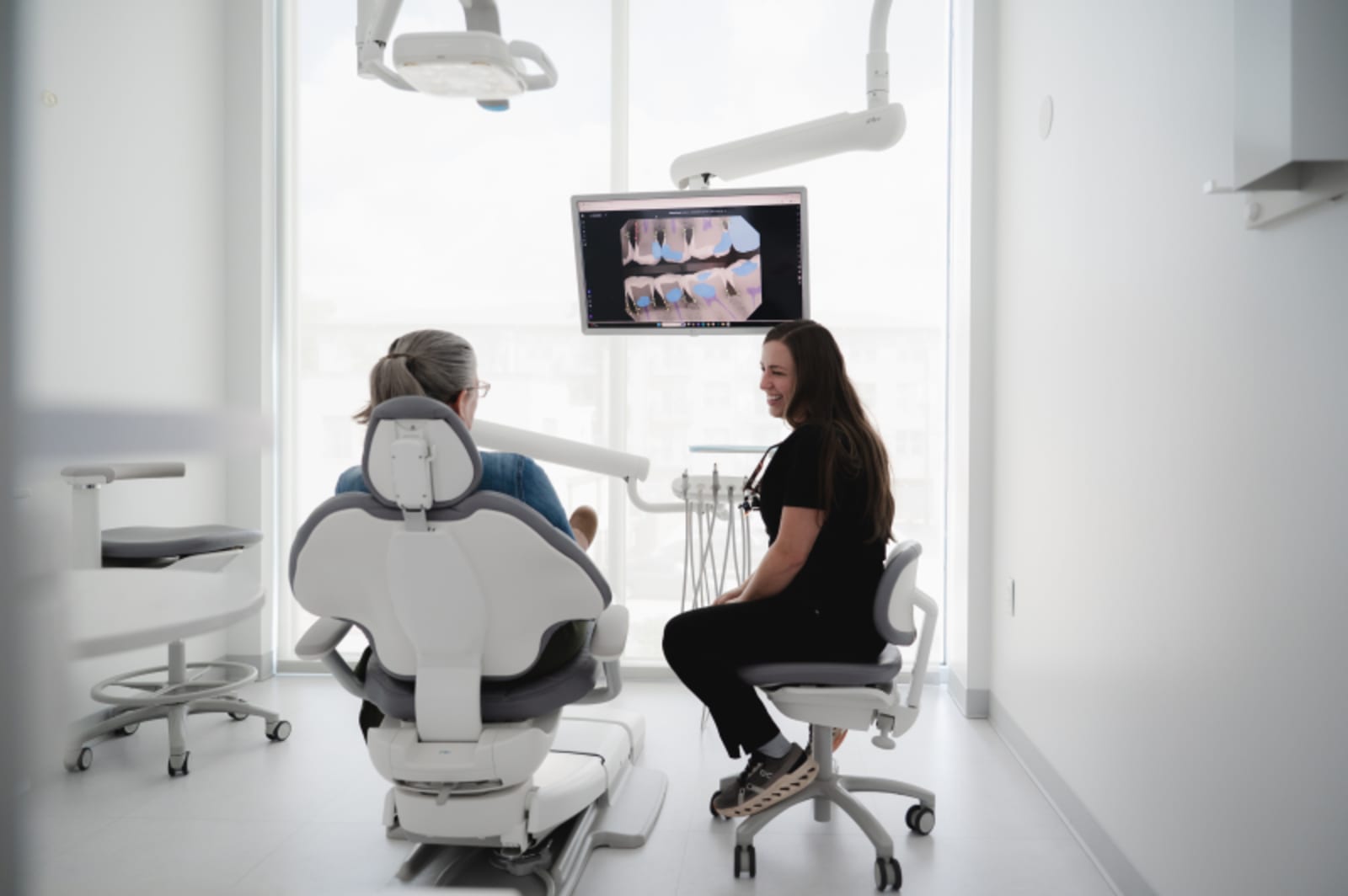
A crown that fell out at dinner or a sharp edge catching your tongue is exactly what we try to handle the day you call. Waiting rarely helps. A manageable crack can deepen, and an exposed tooth grows more sensitive the longer it sits. Our team keeps time open for situations like this.
On an urgent visit, we find out what is going on, get you comfortable, and then decide whether the tooth can be crowned that same day. Sometimes it can. Sometimes the tooth needs root canal therapy first.
Sometimes the damage is beyond what a crown can save, and we will tell you plainly rather than starting something that will not hold. If nerves about treatment kept you from calling sooner, ask about sedation when you book. We offer nitrous oxide, oral conscious sedation, and IV sedation.
For a planned, non-urgent same-day crown, expect roughly two to three hours from the time you sit down to the time the crown is cemented. No follow-up visit is required for the crown itself, though we will check it at your next exam and cleaning.
Preparing for Your Visit and Caring for the Crown Afterward
There is very little to do beforehand. Eat normally before you come, since you will be numb afterward. Bring your insurance information so the front desk can verify benefits while you are in the chair. Tell us about any medications you take and any history that makes dental visits hard for you; that conversation determines whether sedation makes sense.
Afterward, your lip and cheek stay numb for a couple of hours, so hold off on hot drinks and chew carefully until sensation returns. Mild sensitivity to cold or pressure for a few days is common and usually fades.
Longer term, care for a crowned tooth like any other. Brush twice daily, floss around it every day since the margin where crown meets tooth is where decay likes to start, and keep up with exams and cleanings.
Avoid chewing ice or using your teeth to help open packaging. If you grind at night, a nightguard may be needed to help protect the crown and the teeth around it. If the bite ever feels high or off after a week or two, let us know so we can smooth it out.
Cost, Insurance, and Payment For Same-Day Crowns
The cost of a crown depends on which tooth is involved, how much of it remains, whether anything else needs treatment first, and what your plan covers. We go over specifics with you after the exam and before treatment begins, so you will not get a number sprung on you at checkout.
We accept a wide range of dental plans and will verify your benefits ahead of time so you know where you stand before the appointment. Plans we work with include:
- Aetna
- Ameritas
- Beam
- Blue Cross Blue Shield
- Careington
- Cigna
- Delta Dental
- GEHA
- Guardian
- Humana
- Lincoln Financial
- MetLife
- Mutual of Omaha
- Principal Financial
- Reliance Standard Life Insurance
- Sun Life
- United Concordia
- United Healthcare
If you do not see your plan listed, call and ask at (713) 942-0101. The list above is not exhaustive, and our team can walk you through the details when you call.
For patients without insurance, we offer an in-house membership plan, and financing options are available. If money is the reason a tooth has been waiting, say so. There is usually more than one way forward and we'd hate for you to feel constrained due to budget. When you are ready, you can schedule a consultation at Polish Dentistry in Houston to find out what a crown would involve for your tooth.
Why Houston Patients Come to Polish Dentistry for Same-Day Crowns

Our office sits at 215 Westheimer Rd, Suite 200, easy to reach from anywhere in Midtown or Montrose, and we are accepting new patients, including those who have not sat in a dental chair in a very long time.
Dr. Barrilleaux is a prosthodontist, a dentist with additional specialty training in restoring and replacing teeth, which is precisely the work a crown falls under. Dr. Stamper brings broad restorative and general dentistry experience to the practice, so routine and complex cases alike are well covered. Dr. Tandon's focus is periodontics and implant dentistry, which means if the tooth needs gum treatment or eventual replacement with a dental implant, that care happens under the same roof.
Cone beam 3D imaging and digital radiography give us one set of records detailed enough to plan a crown, gum treatment, or an implant without sending you elsewhere for more scans. Sedation is handled in-house as well, at every level from light to deep, and it can be arranged for the same appointment as the crown.
Frequently Asked Questions About Same-Day Crowns
How long does a same-day crown appointment take?
Usually two to three hours, covering the exam, preparation, digital scan, milling, and placement. You typically leave with the permanent crown in place.
Is a same-day crown as strong as a lab-made crown?
Same-day crowns are milled from solid ceramic and hold up well to normal biting and chewing for most teeth. In certain cases, such as heavy grinding or a specific cosmetic goal, a lab-fabricated crown or a different material may be the better choice, and we will tell you if that applies. If grinding is part of the picture, TMJ/TMD treatment options may come up in the same conversation.
Does getting a crown hurt?
The tooth is fully numbed before preparation begins, so the appointment itself should not be painful. Some soreness or cold sensitivity for a few days afterward is common. If you are anxious, ask about sedation when you schedule. We offer nitrous oxide, oral conscious sedation, and IV sedation.
Can I get a same-day crown if my tooth hurts right now?
Often, yes. If a cracked or failing tooth is the source of the pain, a crown may resolve it in one visit. Sometimes the nerve is involved and root canal therapy comes first. The exam tells us which situation you are in.
How long will a same-day crown last?
Many crowns last a decade or longer. Longevity depends on your home care, whether you grind your teeth, and how much healthy tooth structure sits underneath. Daily flossing around the crown and regular cleanings do more for its lifespan than anything else.
Come See Us About That Tooth
The simplest way to find out whether a same-day crown fits your situation is an exam. We will look at the tooth, show you the images, and explain what we would do, why, and what it costs before anything starts. If a filling is the better answer, we will say so.
Call Polish Dentistry at (713) 942-0101 to schedule, or to tell us you are in pain today. If the pain started suddenly or the tooth broke, start with our emergency dental care, and we can talk through sedation options if dental visits make you uneasy.
Handling a cracked tooth early almost always keeps the treatment simpler than if the damage is left in waiting.