Restorative Care at Polish Dentistry | Houston, TX

Restorative Care at Polish Dentistry: Implants, Crowns, and More in Houston
Restorative dentistry rebuilds teeth that are missing, broken, or worn down, so you can chew normally and stop thinking about your mouth all day.
Dr. Barrilleaux and the team at Polish Dentistry handle that work from start to finish. Implants, crowns, bridges, and dentures are all done here, and sedation is available if the thought of any of it makes your stomach drop.
A consultation is where the specifics get answered: what your mouth needs, in what order, and what it will cost. Call us at (713) 942-0101 to set one up.
Key Takeaways
- Dr. Barrilleaux is a prosthodontist, a dentist with specialty training in replacing and rebuilding teeth. She takes complex restorative and full mouth cases directly at our Houston office.
- Implants, same-day crowns, bridges, dentures, and implant-supported dentures are all done here. A multi-step plan does not mean bouncing between offices.
- Ask about sequencing at your consultation. Knowing which step comes first, and what has to heal before the next one, makes a long plan far less overwhelming.
- Nitrous oxide, oral conscious sedation, and IV sedation are all available for patients who need extra comfort during treatment.
- We accept most major dental plans and offer an in-house membership plan for patients without insurance.
What the Process Looks Like, Start to Finish

Every case is different, but the path follows a predictable shape.
1. Consultation and exam
We look at the whole mouth, not just the tooth that hurts. That means your bite, your gum health, and the bone supporting everything. Cone beam imaging, digital X-rays, and an intraoral camera let us see below the surface and show it to you on screen.
2. A written plan you can actually read
You leave with a plan in writing: what we recommend, in what order, and what each phase costs. If there is more than one reasonable route, such as an implant versus a bridge, you hear both and why one may suit your situation better. Real numbers, in front of you, before anything is scheduled.
3. Preparatory care, if it is needed
Gum disease, a failing tooth, or thin bone at an implant site usually has to be addressed first. Treating gum disease, extracting a tooth that cannot be saved, or building up bone with a graft or sinus lift all fall into this phase. It is not a detour. It is what makes the final restoration hold.
4. The restorative phase
This is where the rebuilding happens. An implant is placed and left to fuse with the bone. A crown is fitted over a repaired tooth. A bridge spans a gap, or a denture is built to fit and function. With same-day crown technology, many crowns can be designed and placed in a single appointment.
5. Follow-up and maintenance
We check the fit, the bite, and how the tissue has settled. After that, restorative work is maintained like natural teeth. Exams and cleanings every six months, sometimes more often depending on your history.
What Changes When Your Teeth Are Restored
- Chewing comes back. Missing or broken teeth quietly shrink your diet. Replacing them means you stop planning meals around what your mouth can handle.
- Pain and sensitivity ease. Cracked teeth, exposed roots, and failing old restorations hurt in ways that are hard to predict. A same-day emergency visit is available when something breaks without warning.
- The bone gets a job again. Jawbones tend to shrink after a tooth is lost. A dental implant transmits chewing force back into the bone, which helps preserve it over time.
- Remaining teeth stay where they belong. Teeth drift toward gaps over time. Closing a gap protects the alignment of everything around it.
- Your smile looks like yours. Crowns, bridges, and implant crowns are matched to the shade and shape of your natural teeth. Our same-day crown technology means many repairs finish in a single appointment.
- The repair cycle ends. Patching the same tooth every couple of years is exhausting and expensive. A well-planned restoration is built to last.
Is This the Right Fit for You?
If any of these sound familiar, this is the kind of case we see regularly in Houston:
- One or more missing teeth, whether it happened last month or a decade ago
- A crown, bridge, or filling that is cracking, loosening, or coming apart
- A denture that has stopped fitting the way it used to
- Years away from the dentist and a backlog you have been putting off
- A treatment plan from another office you would like a second opinion on
Some mouths need groundwork before a restoration can go in. That does not rule you out. It just means the plan starts a step earlier. Gum treatment or a bone or sinus graft may come first so the finished restoration has something solid to sit on.
If implants are not the right fit for medical or financial reasons, bridges, partials, and full dentures are genuine alternatives. Implant-supported dentures offer a middle path. They snap onto a small number of implants for stability, at a lower cost than replacing every tooth individually.
No one here is going to lecture you about the gap in your care. We start from where things are with your smile.
A General Sense of the Timeline For Restorative Treatments
Every case moves at its own pace, depending on what your mouth needs and how your body heals. Here is a general sense of what to expect at each stage.
- Consultation and planning: one visit, typically an hour or so with imaging.
- A single crown: often one appointment with same-day crown technology.
- Preparatory care: gum treatment, extractions, or grafting add weeks to a few months of healing before the next phase can begin.
- Implant placement to final crown: the implant needs several months to fuse with the bone before the crown goes on.
- Full arch and All-on-4 style treatment: planned in phases, with a provisional set of teeth in place while healing progresses.
How to Prepare and How to Protect the Work Afterward
Before treatment, bring a current list of your medications and any medical conditions, especially anything that affects healing, blood sugar, or clotting. If oral or IV sedation is part of your plan, you will need a ride home, and we will send you specific eating and drinking instructions ahead of time. If anxiety is part of the picture, let us know early. That way we can build comfort into the plan from the start, not work around it on the day of your appointment.
Afterward, the habits are straightforward. Brush twice a day, clean between your teeth, and keep your exam and cleaning appointments every six months. Implants and crowns do not decay, but the gum and bone around them can still be affected by disease, and that is what tends to cost people their restorations over time.
Our hygienists remove the buildup you cannot reach at home. If the tissue around an implant shows early signs of trouble, getting ahead of it quickly is what keeps the restoration intact. A nightguard is worth considering if you grind your teeth.
And it is worth treating your restorations the way you would natural teeth: avoid using them as tools, and go easy on ice and hard candy.
What Restorative Care Costs and How to Make It Work
What treatment costs depends on how many teeth are involved, whether preparatory work like gum disease treatment or bone grafting is needed, the materials used, and whether sedation is part of the plan. That is why we do not quote numbers before we have looked. Every consultation ends with a written breakdown so you can see the whole picture before anything is scheduled.
A few things that help on the payment side:
- Insurance: We accept plans including Delta Dental, Cigna, Aetna, MetLife, Humana, United Healthcare, Blue Cross Blue Shield, Guardian, United Concordia, Ameritas, GEHA, and others. We verify your benefits before treatment starts and apply them accurately.
- Financing: Payment options are available to spread the cost of treatment over time. Our front office walks you through what applies to your situation.
- In-house membership plan: For patients without dental insurance, our membership plan makes routine care predictable and simplifies the rest of your treatment with us.
Phasing is also an option. If a full plan is not affordable right now, we will tell you which parts are urgent and which can reasonably wait, so you are not choosing between everything and nothing.
To go over the numbers for your own situation, call (713) 942-0101 or schedule a consultation at Polish Dentistry in Houston.
Why Patients Trust Us With This Work

Dr. Barrilleaux is a prosthodontist, which is the specialty devoted to replacing and rebuilding teeth. Complex restorative cases are the center of what she does. She plans around how your bite, bone, and remaining teeth function together, not just how the finished result looks in a photo.
Dr. Tandon specializes in periodontics and implant dentistry. She handles the surgical side of implant placement and the bone and sinus grafting that some patients need before an implant can go in.
Dr. Stamper works alongside both doctors on restorative cases, so the full scope of your treatment stays coordinated under one roof on Westheimer.
Cone beam imaging lets the team plan implant placement in three dimensions before anything is placed. That matters most when bone is limited or a nerve or sinus sits close to the site.
Frequently Asked Questions Patients Ask Before Getting Started
Can I still get implants if I haven't been to the dentist in years?
In many cases, yes. Patients returning after a long gap often need some groundwork first. That usually means treating gum disease or confirming there is enough bone at the site. A thorough exam with Dr. Barrilleaux tells us what is needed before implant placement is on the table. A long gap does not disqualify you. The plan just starts a step or two earlier.
How do I know if my tooth needs a crown or can just be filled?
It comes down to how much healthy tooth structure is left. A filling replaces a small amount of lost tooth and relies on the surrounding tooth for strength. When decay, a fracture, or a large old filling has weakened too much of the tooth, a crown covers and protects the whole thing so it does not split. We will show you the images and explain which way your tooth falls.
Do you offer payment plans for crowns and implants?
Yes. Phasing your treatment can also be combined with financing if that makes the monthly number more manageable. To go over the specifics, our front office needs your insurance card or member ID, the name of the policyholder, and a rough sense of what you are comfortable spending per month. Bring those to your consultation and you can leave with a treatment plan and a payment path the same day.
Will I remember anything with IV sedation?
Most patients remember little or nothing of the procedure itself. You will be monitored throughout, you will respond if we speak to you, and you will need a ride home afterward. Many patients who choose IV sedation have significant anxiety, a long treatment list to work through, or both. It often means fewer appointments overall.
Do I need a referral to see a prosthodontist?
No. You can book directly with us. Dr. Barrilleaux takes full mouth reconstruction and complex restorative cases herself. A complicated situation can be evaluated and treated in one practice, without being sent elsewhere.
How long does restorative work last?
With good home care and regular cleanings, crowns and bridges commonly last many years. Implants can last decades. Results vary from person to person. The biggest factors are gum health, whether you grind your teeth, and keeping up with maintenance visits.
Ready to Find Out What Your Mouth Actually Needs?
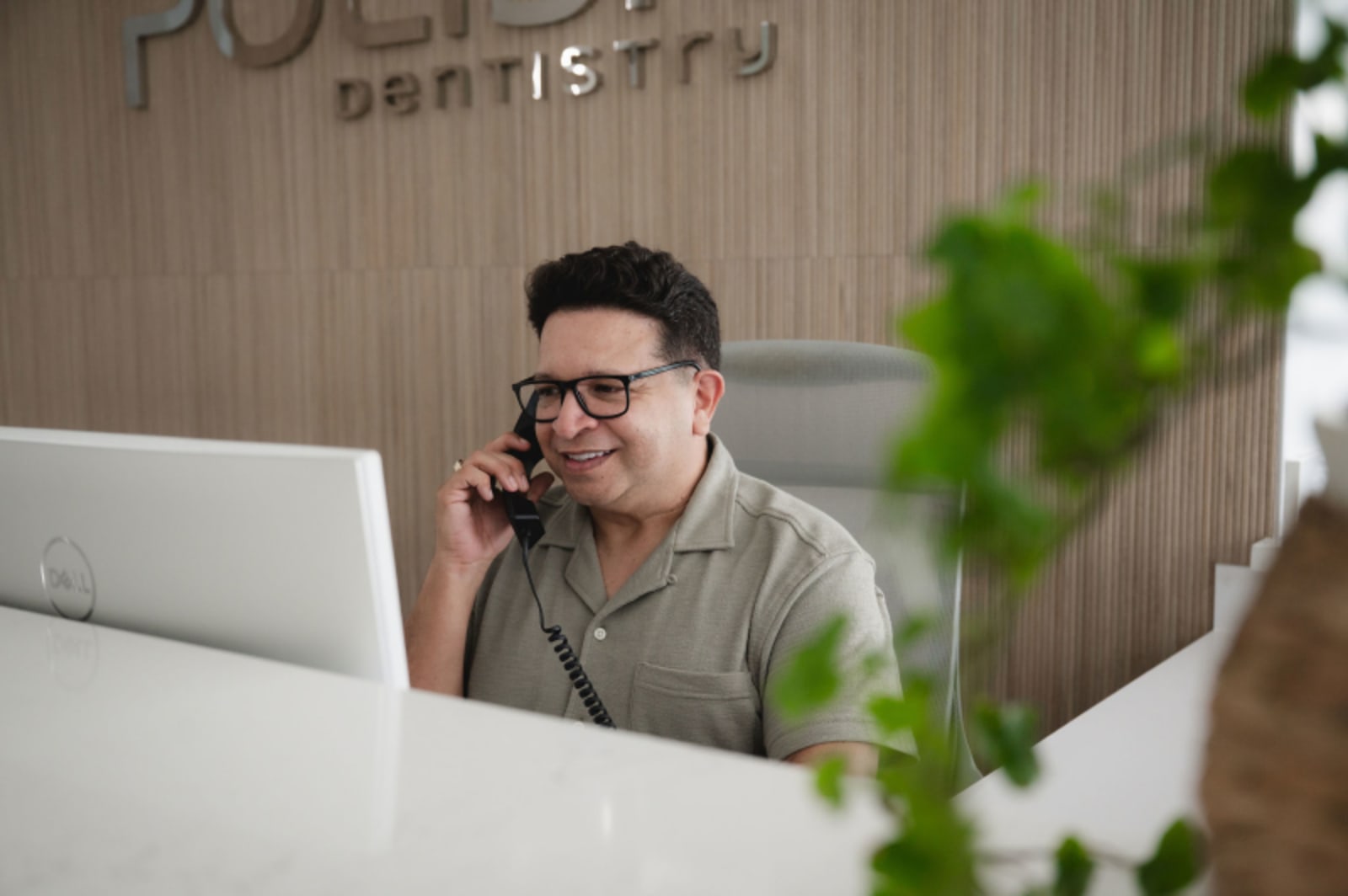
The next step is a conversation with Dr. Barrilleaux, not a quote over the phone. She will look at the whole picture, tell you what is urgent and what can wait, and give you a written plan with real numbers before anything is scheduled.
Polish Dentistry is at 215 Westheimer Rd, Suite 200, Houston, TX 77006, and we are accepting new patients. Call (713) 942-0101 to schedule your consultation.