Implant-Supported Dentures in Houston, TX | Polish Dentistry

Implant-Supported Dentures in Houston, TX
Imagine biting into something at lunch and feeling the plate shift. Or picture sitting in a dentist's chair and hearing that the remaining teeth in your arch cannot be saved, and the word "dentures" landing harder than anything else in that conversation.
For many patients, the question that follows that kind of experience is the same: is there a way to have teeth that stay where they are supposed to?
Yes. At Polish Dentistry, Dr. Barrilleaux, Dr. Tandon, and Dr. Stamper work together to place implant-supported dentures in Houston, TX for patients replacing a full arch of teeth.
The difference from a traditional denture comes down to what holds the restoration in place. A conventional denture rests on the gum line and relies on suction or adhesive. An implant-supported denture locks onto small titanium posts set into the jawbone, so it does not lift or slide when you eat, talk, or laugh. A consultation at our Midtown Montrose office is the place to sort out which path is realistic, including whether All-on-4 fits your situation.
Call us at (713) 942-0101 to learn more.
Key Takeaways
- The number of implants your plan calls for, and whether the final denture snaps on and off or stays fixed in place, are the two details that drive most of the cost and most of the daily routine.
- Your cone beam scan will show whether there is enough bone to place posts now or whether bone grafting or a sinus lift comes first.
- Most full-arch cases take several months between implant placement and the final denture while the bone grows around the posts. In most cases you will not go without teeth during that time. Your care team will tell you exactly what temporary you will wear and when it gets placed.
- If dental anxiety has kept you out of the chair, mention it at the first visit. We offer nitrous oxide, oral conscious sedation, and IV sedation, and knowing that up front changes how we plan your appointments.
- If you are not sure whether implants or a traditional denture fits your situation, a consultation is the right place to start.
How the Treatment Works, Step by Step
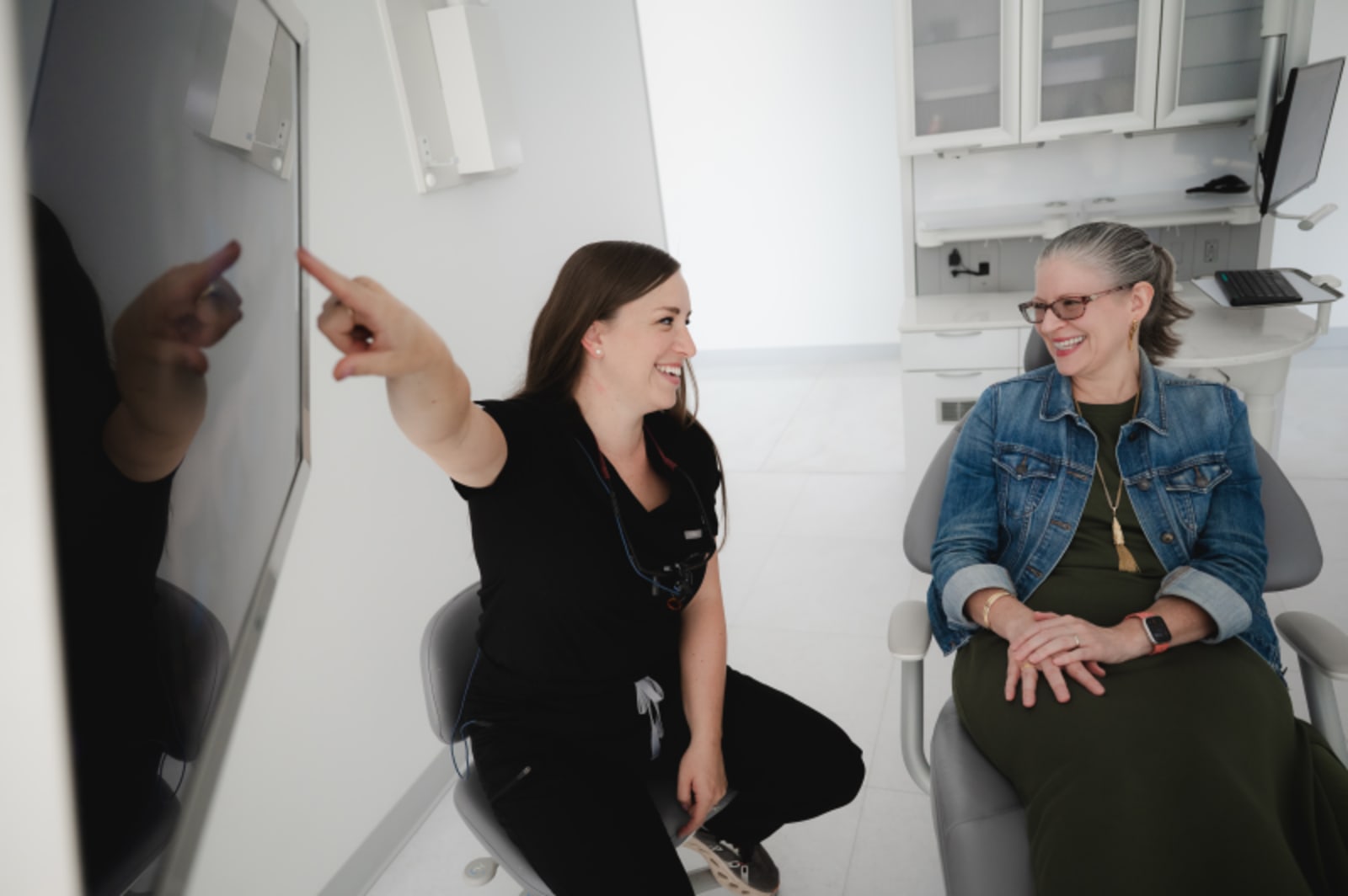
One of the most common questions patients bring to a first implant consultation is what actually happens and in what order. Here is the sequence you can expect at Polish Dentistry.
1. Consultation, imaging, and then a treatment plan
The first visit includes a clinical exam and cone beam imaging, which gives a three-dimensional view of your jaw rather than a flat X-ray. That is how we measure bone volume, check gum health, and see where nerves and sinuses sit. Any preparatory work, such as extractions or bone grafting, gets identified here rather than discovered halfway through.
2. Any preparation the treatment site needs
Some patients need remaining teeth removed. Some need bone grafting first, where graft material is placed as a scaffold while your own bone grows in and around it. Not everyone needs this step. It depends on what the scan shows.
3. Implant placement
The titanium posts are placed into the jawbone. In some cases the posts go in the same day as the extractions. In others, the sites heal first. Sedation options are available, and we would rather talk that through before the day arrives.
4. Healing, integration, and a temporary
The bone needs several months to grow around the posts, a process called osseointegration. A temporary denture keeps you eating and speaking while the implants integrate underneath.
5. Abutments and the final denture
Once the posts are stable, small connectors called abutments are attached, and the final denture is made to fit them. It gets tried in, checked against your bite, and adjusted until it feels right. Small refinements at this stage are normal.
What Changes Once the Denture Is In
You get to go back to eating foods that may have been limited before. Anchored teeth handle bite force differently than a plate resting on gum tissue, so most patients return to a much wider range of foods.
The denture stays put on its own. No adhesive, no adjusting mid-meal.
Speech settles faster, too. Because the restoration does not lift or rock, the adjustment period for talking is usually shorter than with a conventional denture.
The jawbone gets stimulation again. Implant posts transmit pressure into the bone the way tooth roots do, which helps slow the resorption that gradually changes facial shape over years of denture wear.
Fit holds longer as well. A gum-supported denture needs relining as the ridge shrinks beneath it. An implant-supported one is not chasing a moving target in the same way.
Who Implant-Supported Dentures Treatment Is Best For
Candidacy generally comes down to three things: enough jawbone volume to hold the posts, gums and general health that support normal healing, and missing most or all of the teeth in one or both arches.
Bone loss is the concern patients raise most. Years of missing teeth or untreated gum disease do thin the ridge. Bone grafting resolves that in many cases. Where bone is limited but grafting is not desirable, All-on-4 may still work with the bone you have, so ask about it by name at your consultation.
Some situations call for slowing down. Uncontrolled diabetes, active gum disease, heavy smoking, and certain medications all affect how well bone integrates with an implant. We would rather address those first than place posts that struggle. If implants are not the right call, traditional full or partial dentures remain a legitimate option, and we will say so.
Timeline: What to Expect
Results vary from person to person, but a typical full-arch case moves through these milestones:
- Visit one: exam, cone beam imaging, treatment plan, and cost discussion.
- Weeks one to a few months: any extractions or bone grafting, with healing time before placement. Grafted sites generally need several months to heal.
- Surgical visit: implant placement, plus a temporary so you leave with teeth.
- Roughly three to six months: integration, with periodic checks to confirm the posts are stable.
- Final phase: abutments, digital records, try-in, and delivery of the finished implant-supported denture.
Extensive grafting stretches the schedule. Good bone and no extractions shortens it. Your actual timeline is mapped out at the consultation, after we see your scan.
Preparing for Treatment and Caring for It Long Term
Before treatment
Bring a current medication list and be candid about health conditions, especially anything that affects healing or blood sugar. Bring your insurance information so we can check benefits ahead of time.
If you smoke, cutting back before surgery meaningfully helps implants integrate. If the appointment itself is the part that worries you, say so at the consultation so sedation can be built into the plan from the start.
After placement
Some swelling and soreness in the first few days is normal. That is healing, not a sign that something is wrong. Plan on soft foods early on and follow any rinse instructions your provider gives you. Avoid smoking while the sites are closing. Wear your temporary as directed, and if it feels sharp or unstable, call us rather than trying to adjust it yourself.
Long-term care
Clean around the posts or attachments daily using the brush or floss tool we fit you with. Keep your regular checkups so we can monitor the implants, the gum tissue, and the fit of the denture. Implants do not decay, but the gums around them can become inflamed over time, and that is the main thing routine visits catch early.
Cost, Insurance, and Payment Options For Implant-Supported Dentures
Implant-supported dentures cost more than traditional dentures, and in Houston most patients cover a meaningful share out of pocket. What sets the final number is specific to your mouth:
- How many implants your arch requires
- Whether extractions or bone grafting come first
- Whether the denture is removable or fixed
- The current condition of your bone and gum tissue
A range quoted online rarely matches what a given case involves, which is why your estimate is built from your own exam and scan.
We accept a wide range of dental plans, including Delta Dental, Cigna, Humana, Aetna, MetLife, Blue Cross Blue Shield, United Healthcare, and Guardian, and our team will check what your plan may contribute toward the surgical and restorative portions. Implant coverage is often limited, but some plans do pay toward parts of the work.
For the balance, financing is available, and we also offer an in-house membership plan for patients without dental insurance.
Why Patients Across Midtown and Montrose Choose Polish Dentistry
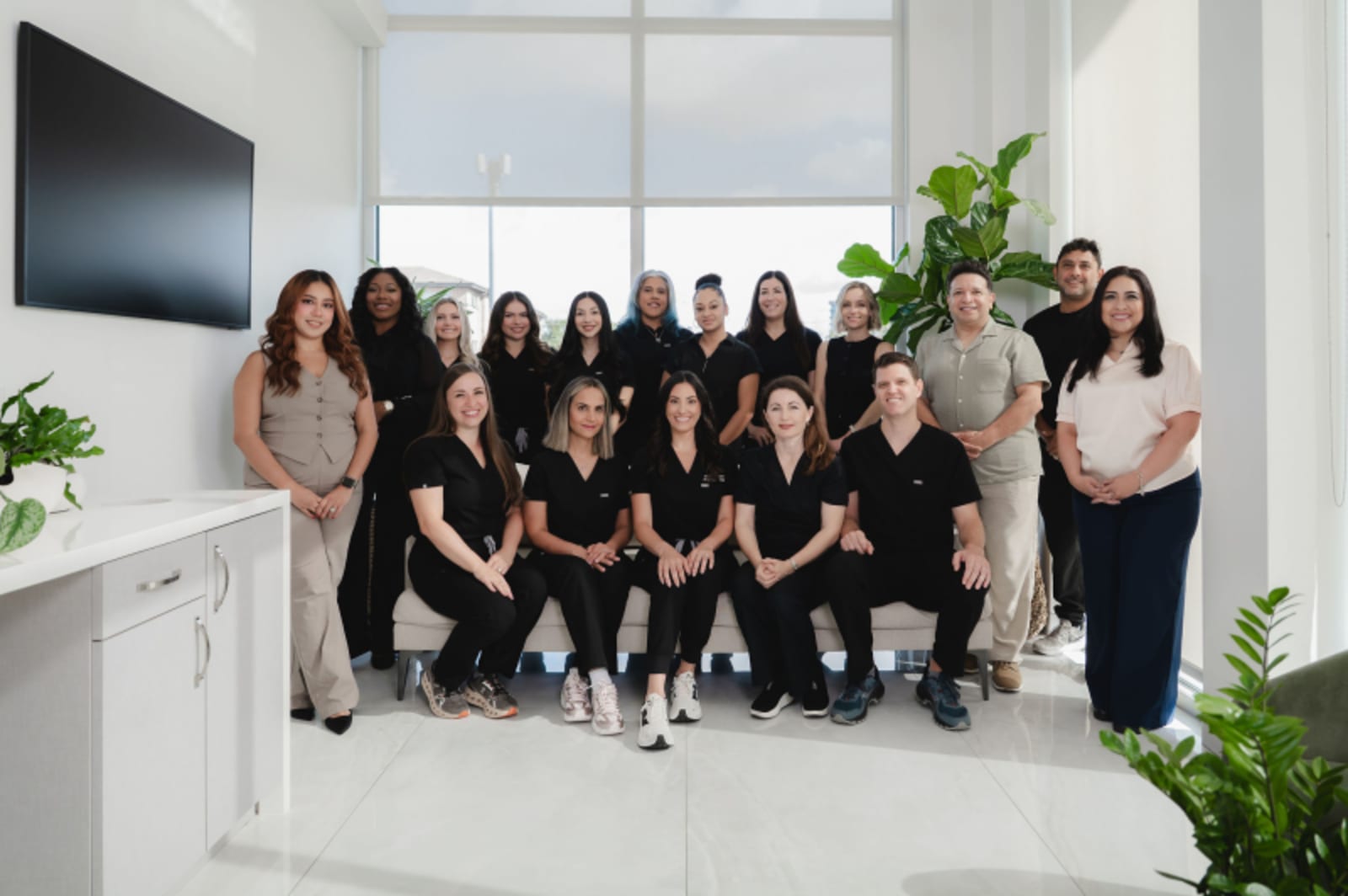
Full-arch work is not a single procedure. It is surgery, healing, and prosthetics that have to work together, and that is easier when the people doing it work together too.
Dr. Barrilleaux is a prosthodontist, the specialty devoted to replacing teeth and designing restorations that fit and function.
Dr. Tandon's work centers on periodontics and implant dentistry, the surgical and gum-health side of the same case.
Dr. Stamper provides general and restorative care. Your evaluation, your implant placement, your final denture, and your financing conversation all happen under one roof.
Many patients who come to us for full-arch treatment have avoided dental care for years. That history is something we plan around, which is part of why we offer nitrous oxide, oral conscious sedation, and IV sedation.
Frequently Asked Questions
How soon after extractions can implants be placed?
Sometimes the same day, sometimes after a few months of healing. It depends on how much healthy bone surrounds the extraction site and whether infection is present. The cone beam imaging gives us a clear picture, and you will leave the consultation with a specific timeline rather than a general estimate.
Will I be without teeth while the implants heal?
In most cases, no. A temporary denture is part of the plan so you can eat and speak through the integration period. Before surgery day, we will walk you through exactly what your temporary will be and when it gets placed.
How much do implant-supported dentures cost in Houston without insurance?
There is no single price, because implant count, grafting needs, and denture type all affect the total. We provide a written estimate at the consultation that covers the whole course of treatment, and we go through financing options and our in-house membership plan at the same appointment.
Are implant-supported dentures removable or fixed?
Both designs exist. Some snap onto the implants and come out for cleaning at night. Others are fixed and can only be removed by a provider. Bone volume, implant count, and your preferences around daily cleaning all factor into which design we recommend.
How is this different from All-on-4?
All-on-4 is one specific approach. It uses four implants, angled to work with available bone, to support a fixed full arch. Implant-supported dentures is the broader category, covering both removable and fixed designs with varying implant counts. The terms are often used interchangeably, but they are not the same thing.
Do implant-supported dentures ever need replacing?
The implants themselves are designed to last many years with healthy gums and regular maintenance. The denture that attaches on top is a prosthetic and can wear over time, so periodic adjustments and eventual replacement of that component are normal. Results vary from person to person, and how well the restoration is cared for plays a role.
Find Out What Is Realistic for You
An exam and a cone beam scan will give you a clear picture of whether implant-supported dentures are a good fit and what the treatment would actually involve. If it has been years since your last dental visit, that is a normal place to start from. If dental anxiety is part of what has kept you away, mention that when you call so we can better accommodate you.
Polish Dentistry is at 215 Westheimer Rd, Suite 200, and we are accepting new patients. Call (713) 942-0101 to schedule a consultation.