Dental Implant in Houston, TX | Polish Dentistry

Dental Implants in Houston, TX | Polish Dentistry
Losing a tooth changes more than your smile. It can affect how you eat, how you speak, and how you feel about showing up in everyday situations. Dental implants are the closest thing modern dentistry has to replacing a tooth from the root up, and they're what we do at Polish Dentistry.
This page covers what implants involve, who's a good candidate, and what the process looks like from consultation through final restoration. We've also included honest information about cost, insurance, and financing, because we know that's often the part that's hardest to find clear answers on.
We're at 215 Westheimer Rd, Suite 200, and we're accepting new patients. If you'd rather talk it through than read it, call us at (713) 942-0101.
Key Takeaways
Here's what's worth knowing about dental implants at Polish Dentistry before your consultation.
- Dental implants replace missing teeth at the root level. Pricing reflects several components: the fixture, the abutment, the crown or prosthetic, and any preparatory work such as an extraction or bone graft. We'll break it out line by line so nothing is a surprise for you.
- Most dental plans treat implants as a major service, often paying a percentage up to your annual maximum. Coverage for the implant post itself is where plans most often fall short, but we'll verify your specific benefits before treatment begins.
- If you don't have dental insurance, our in-house membership plan can reduce what you pay out of pocket for treatment here.
- Financing is available, so you don't have to pay the full balance before you begin.
- Bring your insurance card to your consultation and we'll verify your benefits while you're here.
- If you're missing several teeth, it's worth asking us whether implant-supported dentures or All-on-4 might be a better fit than placing individual implants, both clinically and financially.
What Dental Implant Treatment Involves
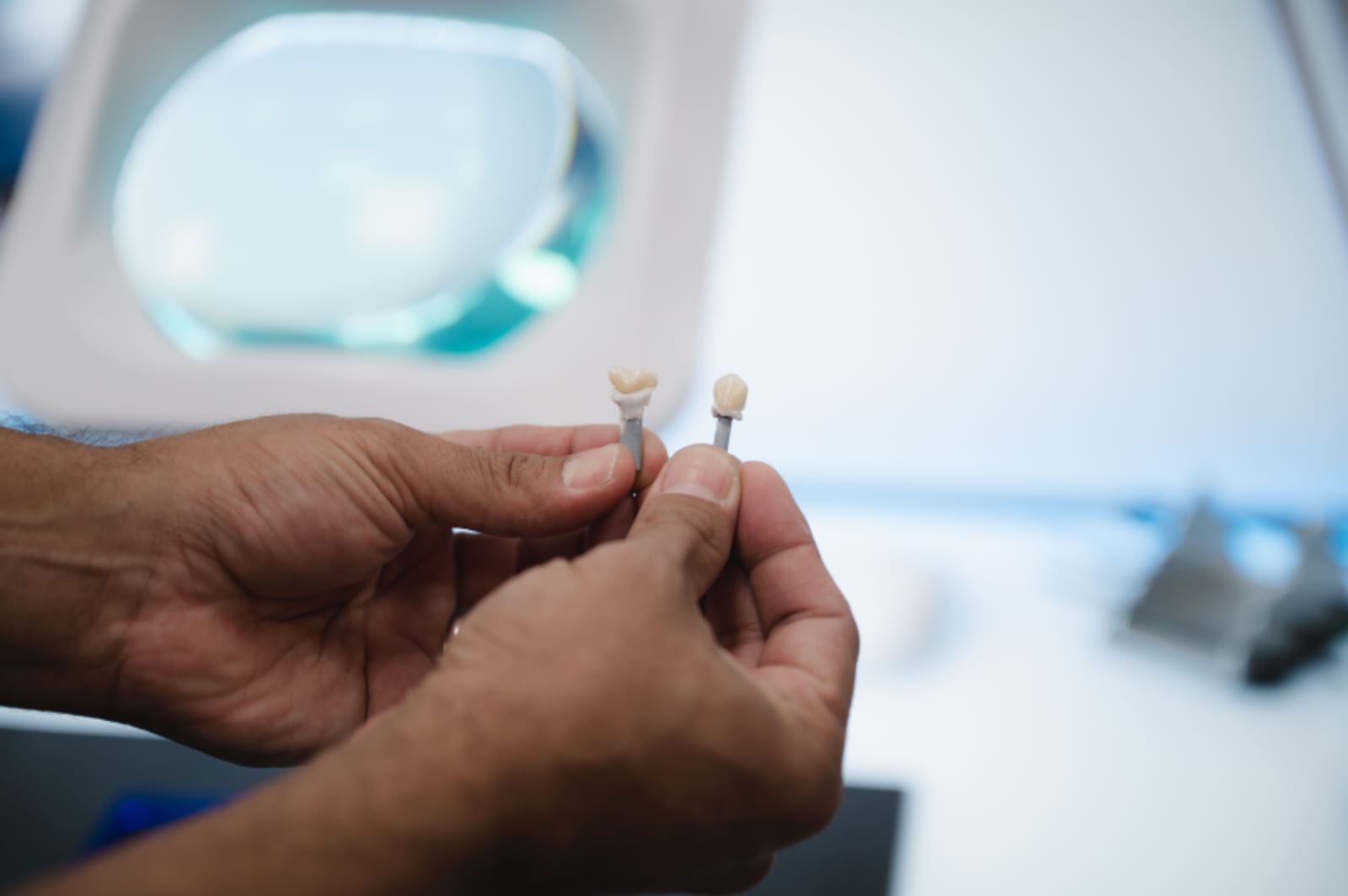
A dental implant isn't a single procedure. It's a sequence of steps tailored to your specific situation. Understanding what's involved helps set realistic expectations for both the timeline and the cost.
The implant fixture
The implant itself is a small titanium post placed in the jawbone to serve as the root of the new tooth. It's what makes an implant fundamentally different from a bridge or denture. There's a stable foundation anchored in the bone, not just resting on top of the gum.
The abutment and restoration
The abutment connects the post to your new tooth. The restoration is the visible part: a crown for a single tooth, or a bridge or full-arch prosthetic for larger cases. Material matters here. Zirconia is often chosen for its strength and natural appearance, and it affects both the outcome and the cost.
Preparatory treatment
Some cases need a preparatory step before the implant can be placed. If a tooth is still present, it'll need to be extracted first. If the jaw has lost density, a bone graft may be recommended. The graft material acts as a scaffold, giving your own bone cells a surface to grow into so the site can support an implant securely. Upper back teeth sometimes need a sinus lift for the same reason. These steps add time to the process, because the site needs to heal before implant placement can happen.
Imaging and sedation
Before anything is planned, we take cone beam images to evaluate bone volume and nerve position in three dimensions. We also discuss sedation. Nitrous oxide, oral conscious sedation, and IV sedation are all available here. Both imaging and sedation are part of the treatment plan, and we'll walk you through what makes sense for your case.
Single implant, implant-supported denture, or All-on-4
A single dental implant replaces one tooth. An implant-supported denture uses implants to anchor a removable or fixed appliance. All-on-4 and All-on-X restore an entire arch on a small number of strategically placed implants, often a more practical path for someone missing most or all of the teeth in a jaw. Which approach fits your situation is something we determine at your exam, not from a price list.
We don't publish flat fees because a flat fee for implant treatment would be a guess. Your exam, your imaging, and your bone volume produce a real number, and you'll receive that in writing before anything is scheduled.
Why Patients Choose Implants
- Neighboring teeth stay untouched. A traditional bridge requires reshaping the healthy teeth on either side of the gap. An implant doesn't.
- Bone stays stimulated. Bone tends to shrink where a tooth root is missing. An implant keeps the bone working, which helps maintain facial shape over time. When bone has already thinned, a bone graft or sinus lift may be recommended before placement so the site can support the implant securely.
- They function like natural teeth. Most patients eat, speak, and chew without thinking about the implant at all. Nothing comes out at night unless the restoration is designed that way, which is one of the key differences between a single implant and implant-supported dentures.
- Care is straightforward. Brush twice daily, clean between the teeth, and keep up with your regular exams and cleanings. No adhesives, no soaking cups.
- They tend to last. With good hygiene and routine visits, implants are a long-term restoration. Results vary from person to person, but over time a well-maintained implant often compares favorably against the ongoing cost of repairs and replacements.
Working With Your Insurance
We're in contract with a wide range of carriers, including:
- MetLife
- Aetna
- Humana
- Cigna
- Delta Dental
- Blue Cross Blue Shield
- United Healthcare
- United Concordia
- Guardian
- Ameritas
- Principal
- Lincoln Financial
- Sun Life
- Beam
- Mutual of Omaha
- Reliance Standard
- Careington
- GEHA
Before treatment begins, we'll verify your specific benefits and walk through what your plan is likely to contribute.
Most major dental plans classify implants as a major restorative service, paying a percentage toward the cost up to your annual maximum. It's worth knowing where coverage tends to apply and where it often doesn't:
- Extractions and the crown that attaches to the implant are more commonly covered, at least in part
- Bone grafting may be covered depending on how your plan categorizes it
- The implant fixture itself is where coverage most often thins out or is excluded entirely
Benefits vary considerably from one plan to the next, even among people on the same carrier. The only way to know what your plan will contribute is to verify it directly, which we'll do with you at your consultation.
If you don't have dental insurance, ask us about our in-house membership plan. It's designed to make care here more accessible without requiring a traditional insurance policy.
Payment Options at Polish Dentistry
We want implant treatment to be within reach for as many patients as possible. If the cost of treatment is a concern, we've got two options that can help make it more manageable.
Our in-house membership plan
If you don't have dental insurance, this plan is offered directly through our office. You pay a set annual fee, and in return your preventive care is covered and you receive discounts on treatment here. It's not an insurance policy. There's no annual maximum and no claims process. For patients without coverage who are considering implants, it generally puts you in a better position than paying standard fees.
Financing and payment plans
We offer financing for higher-cost treatment so the balance can be spread across monthly payments rather than paid in full before you begin. If you've been looking for a Houston dentist that offers payment plans for implants, that option is available here.
Using both together
These two options aren't either-or. Membership discounts can reduce the total, and financing can spread what remains across monthly payments. To see what the numbers look like for your specific case, schedule a consultation with Dr. Barrilleaux and our team at Polish Dentistry, or call (713) 942-0101.
Who Is a Good Candidate for Dental Implants
Implants are a good fit for most adults who are missing one tooth, several teeth, or a full arch. Healthy gums and enough bone to hold the implant securely are the two foundational requirements. Dr. Tandon, our periodontist and implant dentist, evaluates both as part of the planning process and will walk you through exactly where you stand.
Some patients need a preparatory step before placement can begin. Active gum disease is treated first. If the bone has thinned or resorbed, a bone graft or sinus lift may be recommended to give the implant a stable foundation, which adds a phase to the timeline and to the overall plan. Factors like smoking or uncontrolled diabetes can affect how well the site heals, so we talk through those openly before anything is scheduled.
If implants aren't the right fit, or aren't the right fit yet, we'll tell you. We'll also walk through alternatives like dentures or a bridge so you can compare your options clearly before making a decision.
What the Implant Process Actually Looks Like
1. Consultation and imaging
We'll examine your mouth, take cone beam images, and talk through your options, including sedation. You'll leave with a treatment plan and a written cost breakdown so you know exactly what's involved before anything is scheduled. If you're nervous about the visit itself, let us know when you book and we'll plan around that.
2. Preparatory treatment, if needed
Not every case needs this step. If it does, whether that's an extraction, gum disease treatment, or a bone graft, it happens here. Graft sites generally need several months to heal before an implant can be placed, so this phase affects the overall timeline.
3. Implant placement
The implant, a small titanium post, is placed into the jawbone. A single-implant appointment is usually shorter than people expect. Full-arch cases take longer and are often done under IV sedation for comfort.
4. Healing and integration
Over the next few months, bone grows around the implant and stabilizes it. You're not in the chair for most of this. It's happening on its own. Many patients wear a temporary restoration during this stage so there's no visible gap.
5. Final restoration
Your custom crown, bridge, or arch is attached and your bite is checked. Straightforward single-implant cases often wrap up within a few months. Cases that include grafting take longer. We'll give you a realistic schedule at your consultation.
Preparing for Treatment and Caring for Your Implant
Before placement, bring a current medication list. Let us know about blood thinners, bisphosphonates, or any condition that affects healing.
If you're having sedation, we'll provide fasting instructions and you'll need a driver for the day. Getting gum inflammation under control before surgery meaningfully improves how the site heals, so gum disease treatment sometimes comes first.
Afterward, expect mild soreness and some swelling for a few days, and that's normal healing. Stick to soft foods early, avoid smoking, and clean gently around the site as directed.
Once your final restoration is in place, brush twice daily and clean between your teeth every day. Keep up with your regular exams and cleanings so we can monitor the tissue around the implant.
Implants don't decay, but the gum and bone supporting them still need care.
Why Patients in Midtown and Montrose Choose Us for Implants

- A prosthodontist leads the practice. Dr. Barrilleaux specializes in replacing and restoring teeth, and it's the entire focus of her training. Dr. Stamper works alongside her and Dr. Tandon, so you've got consistent, experienced care at every stage of your treatment.
- Surgical and restorative care under one roof. Dr. Tandon handles periodontics and implant surgery here at the practice. You won't need to travel between a surgeon's office and a separate restorative dentist for different phases of the same treatment.
- Sedation is routine, not a special request. Nitrous oxide, oral conscious sedation, and IV sedation are all available. We'll talk through which option fits your case before anything is scheduled.
- No surprises on cost. Your treatment plan, insurance estimate, and payment options are all reviewed in the same visit. You'll leave knowing what's involved, what it'll cost, and how to move forward.
- Easy to get to. Our office on Westheimer Rd is easy to reach from across Houston, and that matters for a treatment that involves more than one visit.
Frequently Asked Questions
Am I a good candidate for dental implants?
Most adults missing one tooth, several teeth, or a full arch are candidates. You'll need healthy gums and enough bone to support the implant securely. If bone has thinned, a graft may be recommended first. Dr. Tandon evaluates both as part of the planning process and will tell you clearly whether implants are the right fit for your situation.
How long does the implant process take?
It depends on what your case involves. An uncomplicated single implant — no grafting, no extractions — can move from placement to final crown in a few months. Cases that include bone grafting take longer because the graft site needs time to heal before the implant goes in. We'll give you a realistic timeline at your consultation, not a best-case estimate.
What's the difference between a single implant, implant-supported dentures, and All-on-4?
A single implant replaces one tooth. Implant-supported dentures use implants to anchor a removable or fixed appliance for patients missing many teeth. All-on-4 restores a full arch on a small number of strategically placed implants — it's often more practical than replacing each tooth individually when most or all of the teeth in a jaw are missing. Which option fits your situation comes out of the exam.
Does insurance cover dental implants?
Most major plans, including Cigna and Humana, classify implants as a major restorative service and pay a percentage up to your annual maximum. The crown and any extraction are more likely to receive benefits than the implant post itself. We're in contract with both carriers — and many others — and we'll verify your specific plan before treatment begins.
What if I don't have dental insurance?
We offer an in-house membership plan directly through our office. You pay a set annual fee that covers your preventive care and gives you discounts on treatment here. It's not insurance — there's no annual maximum and no claims process — but for patients without coverage who are considering implants, it generally puts you in a better position than paying standard fees. Financing is also available so the balance can be spread across monthly payments.
I was quoted a large number somewhere else. What should I do?
Bring that treatment plan with you. We'll look at what was proposed, explain what each line item is for, and tell you whether a different sequence or a phased approach fits your situation. Sometimes the plan was appropriate as written. Sometimes there's another path.
Ready to Take the Next Step?
Your consultation is one visit. Dr. Barrilleaux or one of our doctors will examine your mouth, take cone beam images, and talk through your options, including sedation, so you leave with a clear picture of what treatment involves. We'll put together a written treatment plan and walk you through what your insurance is likely to contribute.
Polish Dentistry is accepting new patients at 215 Westheimer Rd, Suite 200. If you're ready to find out whether dental implants are the right fit, call us at (713) 942-0101 to schedule a consultation.
The earlier we can evaluate your situation, the more options we're likely to have.